
Molecular research: When speed meets precision
KIMMDY software visualizes biological processes in motion – conceived and originally developed at HITS, refined and published at the Max Planck Institute for Polymer Research in Mainz
Within biological cells, molecules are constantly in motion. Investigating these motions, however, is still difficult, due to the fact that these processes occur on very small length and time scales. To overcome these challenges, researchers from the Heidelberg Institute for Theoretical Studies (HITS) and the Max Planck Institute for Polymer Research (MPIP) have developed a simulation method that works rapidly and can predict chemical processes in cells with high precision. Their findings have been published in Nature Communications.
Beyond the limits of standard computer simulations
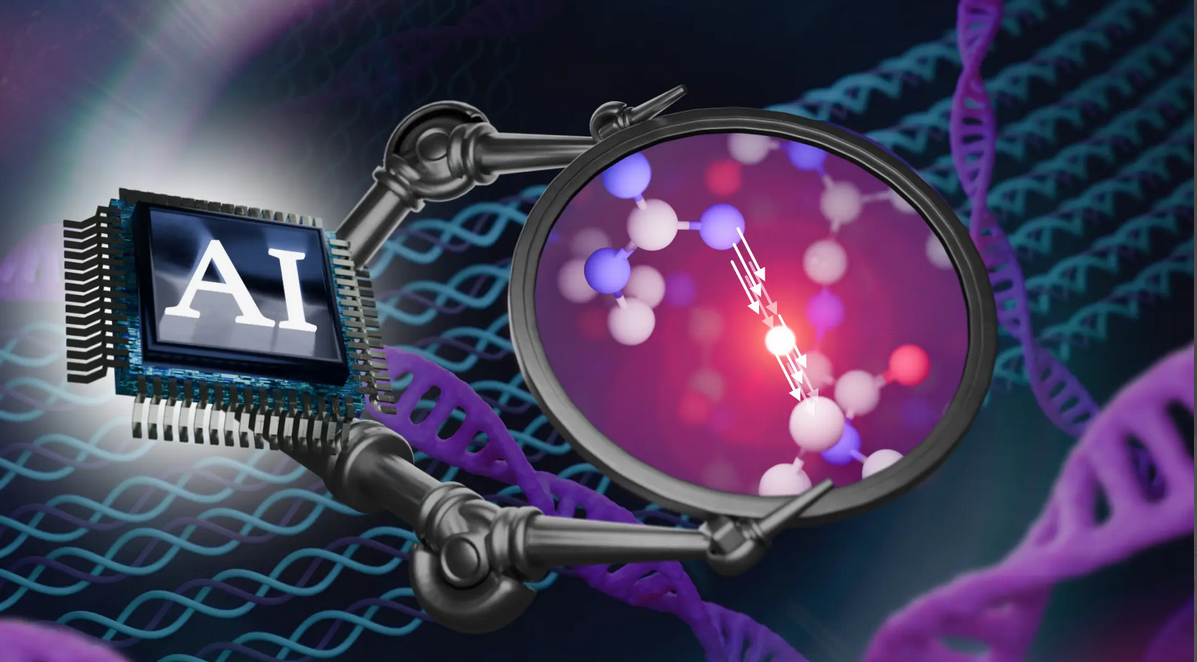
For years, researchers have been using computer simulations to study the behavior of molecules. But these simulations lack one key feature of life: reactivity, which has to be sacrificed for efficiency. Standard methods can handle large systems at sufficient timescales, but bonds cannot break and form in these models. Monitoring the interplay of molecular motion and chemical events, however, is crucial to understanding and designing complex molecular systems.
Researchers from HITS and MPIP have developed a method to overcome this limitation. The new software KIMMDY (short for: Kinetic Monte Carlo Molecular Dynamics) combines various computational approaches and uses machine learning methods to calculate when and where chemical reactions can occur.
“This allows us not only to track how molecules move, but also how they react with one another,” says Frauke Gräter, director of the “Biomolecular Mechanics” department at MPIP and former group leader at HITS. “This, in turn, opens up entirely new possibilities for investigating complex biological processes on a computer.”
The newly developed method makes it possible to simulate very large molecular systems—such as proteins or DNA in their natural environment—while also tracking reaction chains in which one chemical step triggers the next. Such processes play a role in many biological contexts, e.g. in collagen, a protein crucial for the stability of our skin, bones, and connective tissue. The research team was able to track how reactive molecular fragments migrate through the protein and accumulate at specific sites. Damage to DNA, such as that caused by UV radiation, can now also be investigated.
This new method stands out because it allows systems with millions of atoms to be calculated more efficiently than in competing approaches. This means that KIMMDY could help us better understand biological and chemical processes in the future. At the same time, KIMMDY opens up new possibilities for interpreting experimental results and planning new experiments. The project was supported by the Klaus Tschira Foundation.
Publication:
Hartmann, E.; Buhr, J.; Riedmiller, K.; Ulanov, E.; Schüpp, B.; Kiesewetter, D.; Sucerquia, D.; Aponte-Santamaría, C.; Gräter, F. KIMMDY: a biomolecular reaction emulator. Nat Commun 17, 3500 (2026) Source DOI
More information: www.simplaix.org
Scientific contact:
Prof. Dr. Frauke Gräter
Director
Max Planck Institute for Polymer Research
graeter@mpip-mainz.mpg.de
Press contact:
Angela Michel
Head of Communications
Heidelberg Institute for Theoretical Studies (HITS)
E-Mail: angela.michel@h-its.org
www.h-its.org
About HITS
HITS, the Heidelberg Institute for Theoretical Studies, was established in 2010 by physicist and SAP co-founder Klaus Tschira (1940-2015) and the Klaus Tschira Foundation as a private, non-profit research institute. HITS conducts basic research in the natural, mathematical, and computer sciences. Major research directions include complex simulations across scales, making sense of data, and enabling science via computational research. Application areas range from molecular biology to astrophysics. An essential characteristic of the Institute is interdisciplinarity, implemented in numerous cross-group and cross-disciplinary projects. The base funding of HITS is provided by the Klaus Tschira Foundation.
 powered by Borlabs Cookie