
The molecular research “booster” evolves: SIMPLAIX collaboration starts the next phase
Computer simulations and Artificial Intelligence are the main pillars of the “SIMPLAIX” collaboration, initiated by the Heidelberg Institute for Theoretical Studies (HITS). Together with colleagues from Heidelberg University and Karlsruhe Institute of Technology (KIT), HITS researchers are addressing challenges in the simulation of biomolecules and molecular materials by pooling their expertise in multiscale computer simulation and machine learning. Established in 2021, SIMPLAIX has been successfully evaluated and has now started its second phase, with the Max Planck Institute for Polymer Research (MPIP) as an additional partner. The initiative is funded by the Klaus Tschira Foundation.
Molecular mechanisms and the rational design of molecules and materials for specific applications have traditionally been explored using physics-based modeling and simulations. These methods have revolutionized modern science and technology. However, they reach their limits when it comes to mapping, exploring, and analyzing the infinitely complex and variable structures and properties of molecular systems over the wide range of relevant scales. Here, data-driven and machine learning methods offer a promising approach.
This is why the Heidelberg Institute for Theoretical Studies (HITS), Heidelberg University, and the Karlsruhe Institute of Technology (KIT) launched the SIMPLAIX collaboration in 2021. They combine the expertise of the three partner institutions to address the challenges of bridging scales in simulating biomolecules and molecular materials through multiscale simulation and machine learning.
Along with collaborative research projects, the first years saw well-attended international workshops and many internal meetings, a remarkable number of publications and several awards for SIMPLAIX PIs, among them an ERC Advanced Grant and a DFG Heinz-Maier Leibnitz Prize.
After a successful evaluation, SIMPLAIX has started its second phase, gaining additional strength by the addition of a new associate partner: The Max Planck Institute for Polymer research (MPIP) in Mainz. With 10 principal investigators (PIs) and 8 projects, SIMPLAIX will evolve and broaden the cross-disciplinary and cross-institutional scientific collaborations in the research projects.
In addition, the highly successful SIMPLAIX workshop series will continue in May 2026. The registration is open: https://simplaix-workshop2026.h-its.org/. This year’s workshop will be jointly organized with RTG 2450, a DFG-funded research graduate school at KIT.
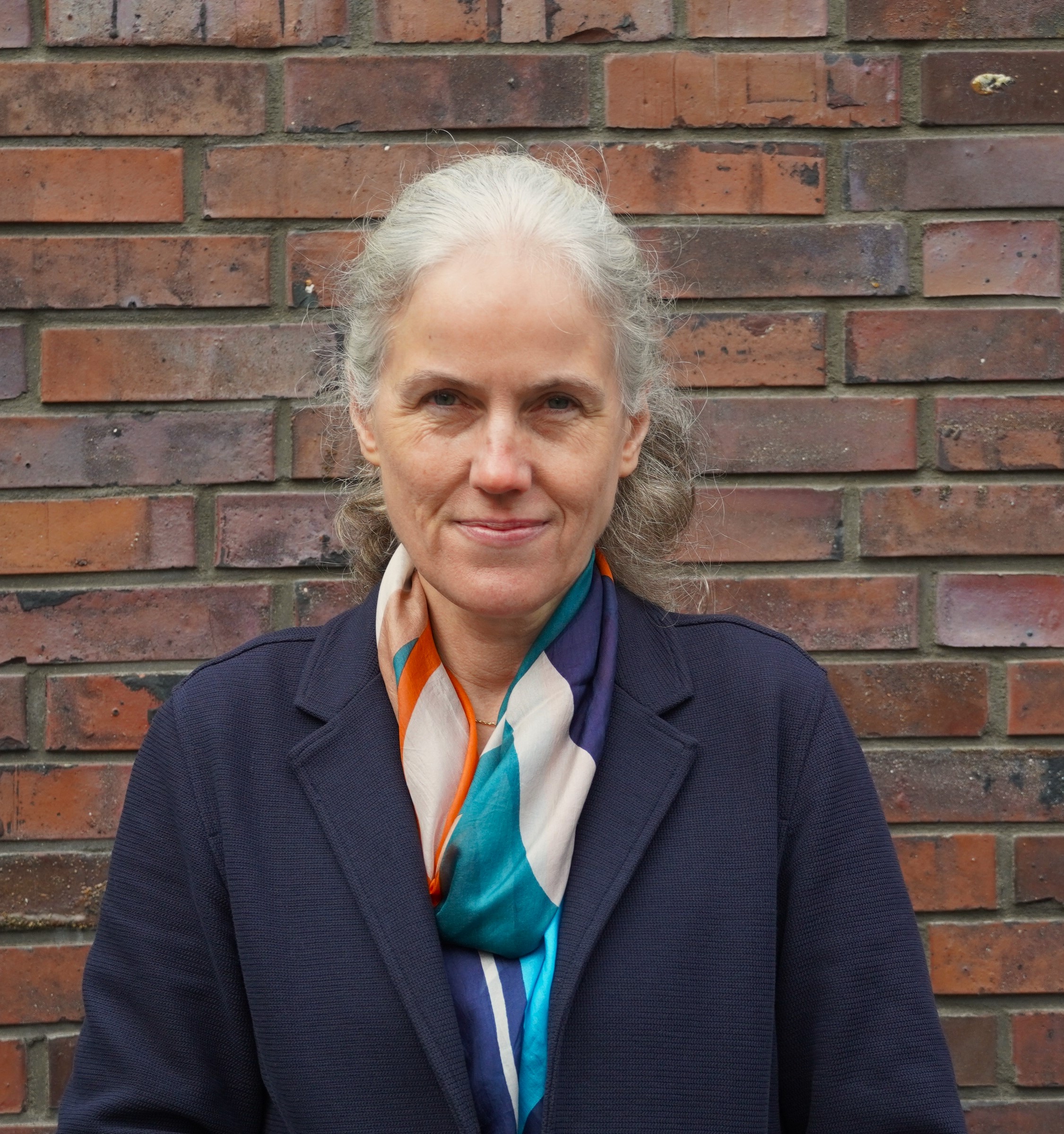
SIMPLAIX is coordinated by HITS researcher Rebecca Wade, supported by HITS Alumna Frauke Gräter, now Director at the MPIP. The Klaus Tschira Foundation provides financial support which is complemented by the four participating institutions.
.
More information: www.simplaix.org
Scientific contact:
Prof. Dr. Rebecca Wade
Molecular and Cellular Modeling Group (MCM)
Heidelberg Institute for Theoretical Studies (HITS),
Press contact:
Angela Michel
Head of Communications
Heidelberg Institute for Theoretical Studies (HITS)
E-Mail: angela.michel@h-its.org
www.h-its.org
About HITS
HITS, the Heidelberg Institute for Theoretical Studies, was established in 2010 by physicist and SAP co-founder Klaus Tschira (1940-2015) and the Klaus Tschira Foundation as a private, non-profit research institute. HITS conducts basic research in the natural, mathematical, and computer sciences. Major research directions include complex simulations across scales, making sense of data, and enabling science via computational research. Application areas range from molecular biology to astrophysics. An essential characteristic of the Institute is interdisciplinarity, implemented in numerous cross-group and cross-disciplinary projects. The base funding of HITS is provided by the Klaus Tschira Foundation.
 powered by Borlabs Cookie