
Not So Stable After All: Pulsations Reshape Massive Stars Before Explosion
Pulsations undergone by red supergiant stars right before they explode significantly influence their observable pre- and post-supernova properties. A study by an international team of researchers at the Heidelberg Institute for Theoretical Studies (HITS) and the Institute of Astronomy at KU Leuven, published in the Astrophysical Journal Letters in February, suggests that contrary to prior assumptions, pre-supernova stars are unstable.
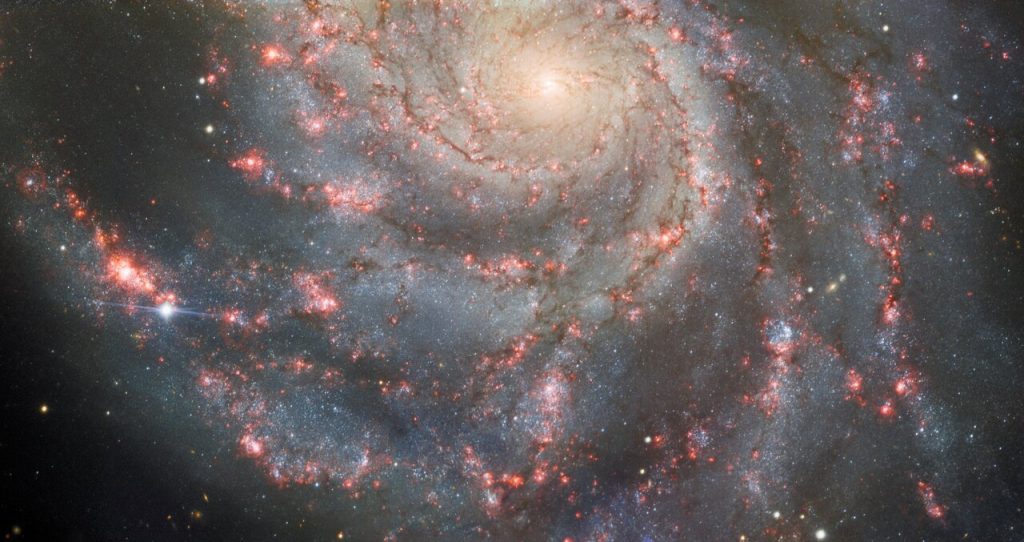
It is observationally well-known that just before they explode, massive red supergiants pulsate. However, finding stars in this last phase of evolution is relatively rare, which means that there is little that is known about their properties at this stage. On account of this, many supernova models have overlooked these pulsations, assuming that the state of these stars prior to their explosion is stable.
Modeling the dance of death
A team of international researchers, spearheaded by Vincent Bronner (Heidelberg Institute for Theoretical Studies) and Eva Laplace (Institute of Astronomy, KU Leuven), has worked on creating a self-consistent model of hydrodynamic processes in red supergiants spanning a range of masses ahead of their explosion. This investigation looks into the development of radial envelope pulsations and their effect on the explosion and finds that these pulsations happen naturally and grow in amplitude as the star draws nearer to explosion.
The team’s new model was applied to two hydrogen-rich supernovae for which pulsating red supergiant progenitors had been reported. The properties observed in one of the supernovae pre- and post-explosion are consistent with the team’s expectations, validating their model. “The best observed hydrogen rich supernova in recent times, SN 2023ixf, originated from a pulsating star, exactly as our models predict,” says Laplace. “This tells us we can no longer ignore stellar pulsations, in particular for the most massive stars, in which these have a larger effect.”
The timing of the explosion is also significant, according to Bronner. “A supernova that occurs at different phases of a massive star’s pulsation cycle can look dramatically different. That means we must be careful when interpreting both supernova explosions and observations of massive stars before they die. What we may be seeing is not a dim star of low mass, but instead a massive star caught in a contracted pulsation phase.” For the other supernova, SN 2024ggi, the pulsation period of the progenitor star could not be estimated reliably, hindering a detailed comparison to the new models.
Where do we go from here?
The team is now working on improving the numerical setup for the simulations, which will allow for the modeling of more massive stars, including their circumstellar material. Moreover, the team hopes that the enormous set of data that will be produced by the Vera Rubin Observatory’s Legacy Survey of Space and Time will provide the statistics that will make it possible to probe the connection between pulsations and explosions.
Publication:
The paper “Pulsations Change the Structures of Massive Stars before Explosion: Interpreting SN 2023ixf and SN 2024ggi” by Eva Laplace, Vincent A. Bronner, Fabian R. N. Schneider, and Philipp Podsiadlowski is published in The Astrophysical Journal Letters, Vol. 998, L40 (2026). DOI: 10.3847/2041-8213/ae3d2e
A discussion of the paper, featuring Eva Laplace and Vincent Bronner, is also available on the AAS Journal Author Series YouTube channel: https://youtu.be/2QMrDo8P2ME
Scientific Contact:
Priv.-Doz. Dr. Fabian Schneider
Junior Group Leader
Stellar Evolution Theory
Heidelberg Institute for Theoretical Studies (HITS)
https://www.h-its.org/people/dr-fabian-schneider/
Media contact:
Angela Michel
Head of Communications
Heidelberg Institute for Theoretical Studies (HITS)
+49 (0)6221 533 277
angela.michel@h-its.org
About HITS
HITS, the Heidelberg Institute for Theoretical Studies, was established in 2010 by physicist and SAP co-founder Klaus Tschira (1940-2015) and the Klaus Tschira Foundation as a private, non-profit research institute. HITS conducts basic research in the natural, mathematical, and computer sciences. Major research directions include complex simulations across scales, making sense of data, and enabling science via computational research. Application areas range from molecular biology to astrophysics. An essential characteristic of the Institute is interdisciplinarity, implemented in numerous cross-group and cross-disciplinary projects. The base funding of HITS is provided by the Klaus Tschira Foundation.
 powered by Borlabs Cookie