
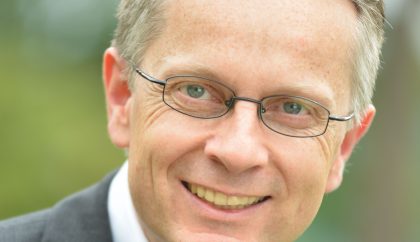
Volker Springel elected to the German Academy of Sciences “Leopoldina”
Volker Springel, head of the Theoretical Astrophysics group at the Heidelberg Institute for Theoretical Studies (HITS), has been elected to the …
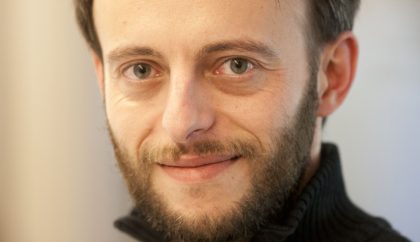
„Hands on“: Auszeichnung für Bioinformatik-Praktikum
This text is only available in German. Die Lehrveranstaltung „Hands-on Bioinformatics Practical“ von Prof. Alexandros Stamatakis und Dr. Tomas Flouri wird …
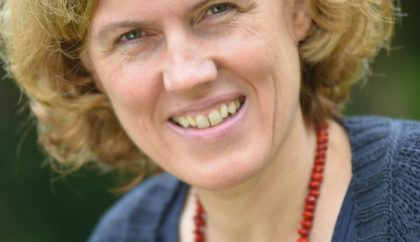
HITS researcher Rebecca Wade receives ISQBP Award in Computational Biology
HITS Molecular and Cellular Modeling group leader and HITS scientific director Prof. Dr. Rebecca Wade was awarded the International Society of …
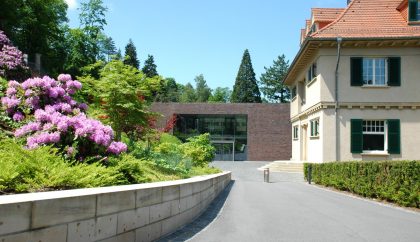
Statistik, Seide, Supernovae: Spitzenforschung mit Supercomputern am Tag der offenen Tür im HITS
Das Heidelberger Institut für Theoretische Studien (HITS) öffnet am Samstag, 2. Juli 2016, von 11 bis 17 Uhr seine Türen im Schloss-Wolfsbrunnenweg 35 fü…
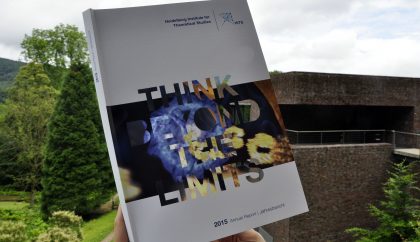
HITS Annual Report: Advanced Research
Annual Report of the Heidelberg Institute for Theoretical Studies (HITS) published: Advanced research using supercomputers – from molecular biology to astrophysics. In 2010, …
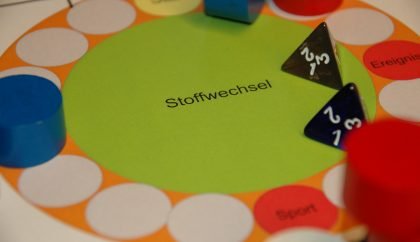
HITS at Explore Science 2016
Der menschliche Körper steckt voller Überraschungen. So können unsere Augen über 20 Millionen Farben und unsere Nase mehr als eine …
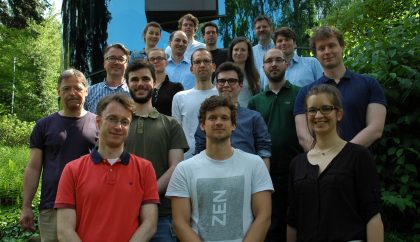
Not only the Weather: Workshop on Advances in Economic Forecasting
When we are talking about forecasting, most of us associate it with the weather, come rain or shine. However, forecasting is …

Call for Proposals for Genomic Information Compression and Storage
MPEG Issues Genomic Information Compression and Storage Joint Call for Proposals in Conjunction with ISO/TC 276/WG5 The introduction of high-throughput …
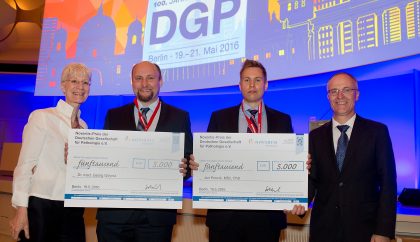
Killerzellen des Immunsystems überraschen mit potentem Gift gegen Tumoren
Wissenschaftler des Universitätsklinikums Heidelberg entdeckten möglichen neuen Wirkstoff gegen Krebs / Auszeichnung mit dem Novartis-Preis der Deutschen Gesellschaft für …
Highest Scaling on JUQUEEN
Philipp Edelmann and Friedrich Röpke (PSO group at HITS) showed during the Extreme scaling workshop 2016 at the Jülich Supercomputing …
 powered by Borlabs Cookie