
Project 7: Design of Functional Proteins with Controlled Electron Transfer and Radical Scavenging Capabilities
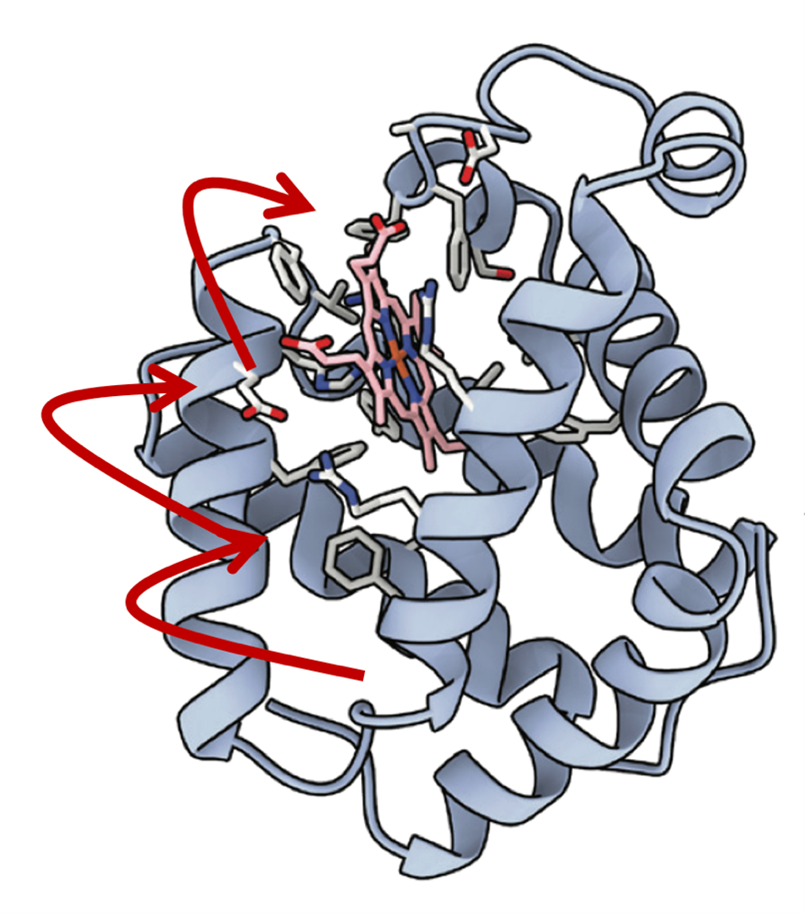
This project aims at studying and controlling electron transfer in proteins. An important starting point will be natural proteins such as cytochromes, which feature very specific electron transfer pathways from the outside to the central active site. We will use reactive Molecular Dynamics simulations enhanced by Machine Learning and de novo design to optimize pathways.
Our design strategy will focus on incorporating aromatic residues, and, crucially, at the ends of these designed electron transfer chains, we will strategically position Dihydroxyphenylalanine (DOPA) residues. As demonstrated by us in collagen, DOPA exhibits significant radical scavenging capacity, acting as a redox relay. The most promising protein designs will be tested experimentally. The designs will provide means to systematically study this important biological function, and have a high potential to be of biomedical use.
Team

Prof. Frauke Gräter
Lead Principal Investigator (Max Planck Institute for Polymer Research, Mainz)
Phone: +49 (0)6131 379 180
More Information
Jun.-Prof. Dr. Jan Stühmer
Co-Principal Investigator (HITS)
Phone: +49 6221 533 220
More Information powered by Borlabs Cookie