
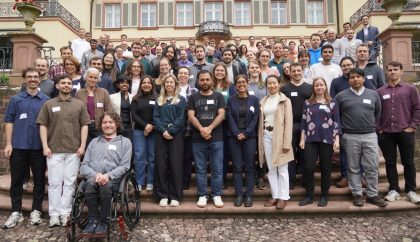
4th SIMPLAIX Workshop: A big Thank You!
A heartfelt thank you to all speakers and participants for helping make the 4th SIMPLAIX Workshop on “Machine Learning for Multiscale …

HITS Open House 2026
Climate, Molecules, Galaxies: One Institute. Many Dimensions. Every two years, the Heidelberg Institute for Theoretical Studies (HITS) at Schloss-Wolfsbrunnenweg 35 in Heidelberg …
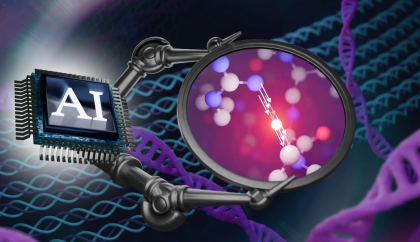
Molecular research: When speed meets precision
KIMMDY software visualizes biological processes in motion – conceived and originally developed at HITS, refined and published at the Max Planck Institute …
The molecular research “booster” evolves: SIMPLAIX collaboration starts the next phase
Computer simulations and Artificial Intelligence are the main pillars of the “SIMPLAIX” collaboration, initiated by the Heidelberg Institute for Theoretical Studies (…

Tilmann Gneiting: 2026 Wald Memorial Award and Lecture
HITS Group Leader Tilmann Gneiting to receive the 2026 Wald Memorial Award and deliver the Wald Lectures at the IMS Annual Meeting …
Registration now open: 4th SIMPLAIX Workshop on “Machine Learning for Multiscale Molecular Modeling”
The 4th SIMPLAIX Workshop on “Machine Learning for Multiscale Molecular Modeling” will take place in the Studio Villa Bosch in Heidelberg …
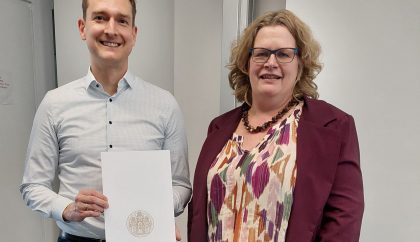
Habilitation for HITSter Fabian Schneider
Dr. Fabian Schneider successfully completed the habilitation process at the Department of Physics and Astronomy of Heidelberg University. Fabian Schneider has …

Issue 1 | 2026
With the start of the new Clusters of Excellence – DYNAVERSE and SynthImmune – HITS is participating in two major projects in astronomy …
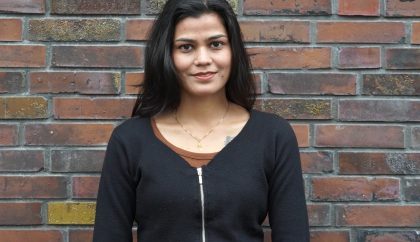
HITS welcomes 2026 Journalist in Residence Monika Mondal
The Heidelberg Institute for Theoretical Studies gives science journalists the opportunity to deepen their knowledge of computer-based, data-driven science with a …
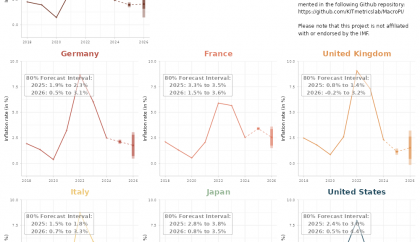
Forecasting made Simple and Transparent
From politicians and businesses to unions and individuals, many stakeholders are closely watching how economic conditions are likely to unfold in …
 powered by Borlabs Cookie